Daily cash close for salons: 5 steps to fewer drawer differences
At closing the drawer is 100 short and nobody knows where it went. These end-of-day steps take about 10 minutes and make every difference traceable.
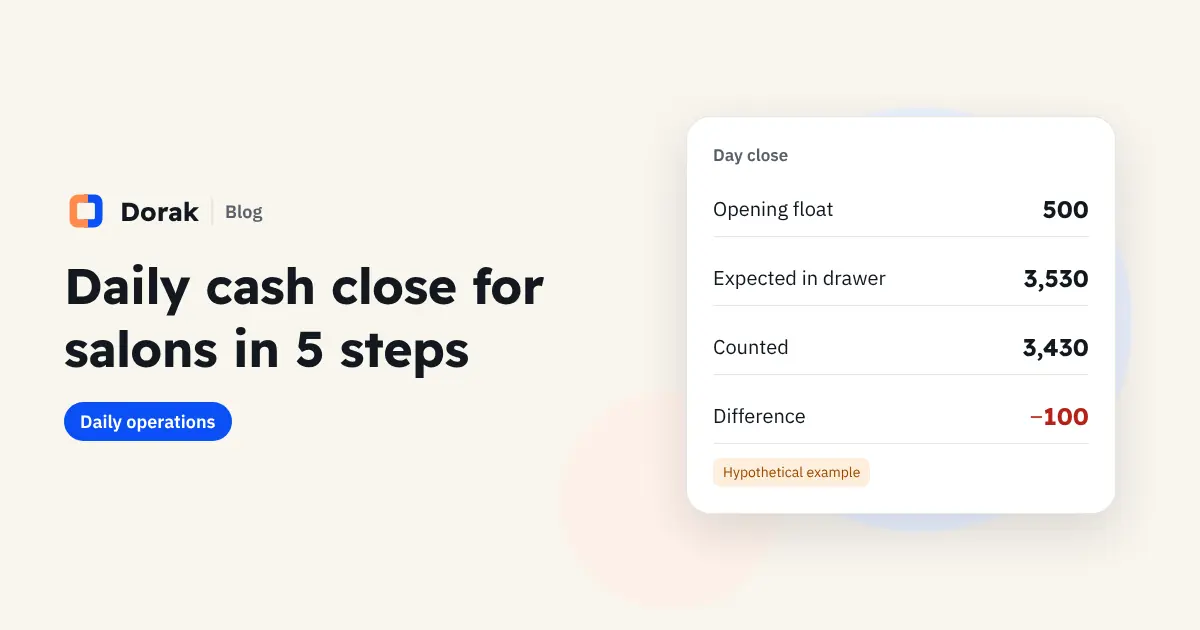
A drawer difference is rarely theft. More often it's a service that was done but never recorded, a transfer counted as cash, or a small expense paid from the drawer without a note. A daily close catches these the same day, before they pile up into an argument.
Why does the drawer come out different?
- An unrecorded service: a walk-in paid and never made it into the system or the notebook.
- The wrong payment method: a transfer or card payment recorded as cash, so the expected amount is higher than what's there.
- Expenses from the drawer: tea, supplies, transport, not written down.
- Wrong change: especially at busy times.
- An unknown opening float: nobody counted the change in the morning.
The formula you need
Expected cash in the drawer at closing =
Opening float + everything paid in cash (services and deposits) − cash refunded to customers − expenses paid in cash
Anything paid by card or transfer stays out of this formula, because it never entered the drawer. That alone settles half of all differences.
An end-of-day routine in 5 steps
- Close open bookings. Mark every finished appointment as completed or no-show. A completed booking with no payment means money that wasn't recorded.
- Check the payment method of each sale. Run through the day's payments and make sure cash is cash and transfers are transfers.
- Record cash expenses. Any amount that left the drawer today, however small.
- Count the drawer. Write down the counted amount, and don't look at the expected figure before counting, so it doesn't influence the count.
- Compare and add a note. If there's a difference, write the known reason or "unknown", and who closed.
What to do when there's a difference
- The difference equals a known service: usually an unrecorded service or the wrong payment method. Check the last hour first.
- Small and recurring: check change-giving and rush hours, and keep enough change in the morning.
- Large or unexplained: don't accuse anyone on the spot. Write the note and go through the transactions with the team the next day.
Paper notebook or closing in the system?
| Notebook | System | |
|---|---|---|
| Calculating expected cash | By hand, with a calculator | Automatic from the day's payments |
| Separating cash, card and transfer | Depends on what was written | Every payment has its method |
| Changing the figure after closing | Easy, which is the problem | A closed day can't be closed twice |
| Reviewing past days | Flipping pages | Expected, counted and difference for each day |
How the day close works in Dorak
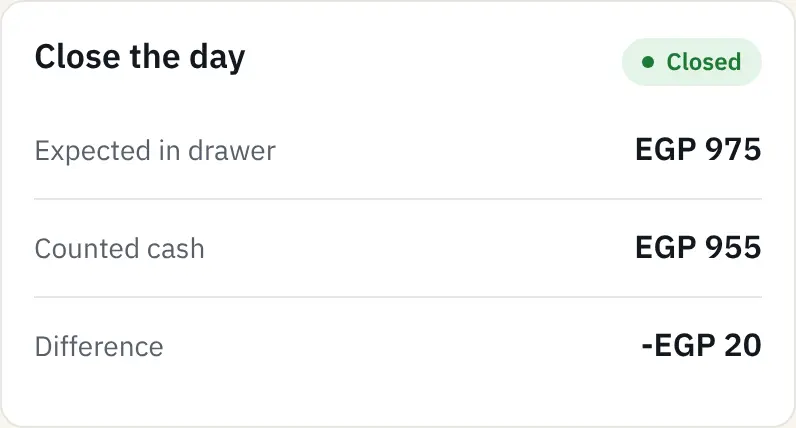
On the accounts page you enter the opening float and the counted amount. Dorak calculates the expected cash from cash payments, deposits, refunds and cash expenses, and shows the difference with your note and who closed. Once closed, the day stays recorded as it was. Accounts and reports are part of the Pro plan.
Try it on a real day at your salon: start a 14-day free trial with every feature and no bank card, or see Dorak for salons.
Frequently asked questions
Who should close the drawer?
The person responsible for cash on that shift, ideally with the owner or manager reviewing differences daily.
Do card and transfer payments count in the drawer?
No. They are part of the day's revenue but never enter the drawer. Check them against the bank or wallet statement.
How long does the close take?
If every sale is recorded when it happens, usually a few minutes: count the drawer and compare two numbers.